
Blog / Masterclass · 4 min read
What an AI Operator Actually Does: Inside an Atlas Coaching Call
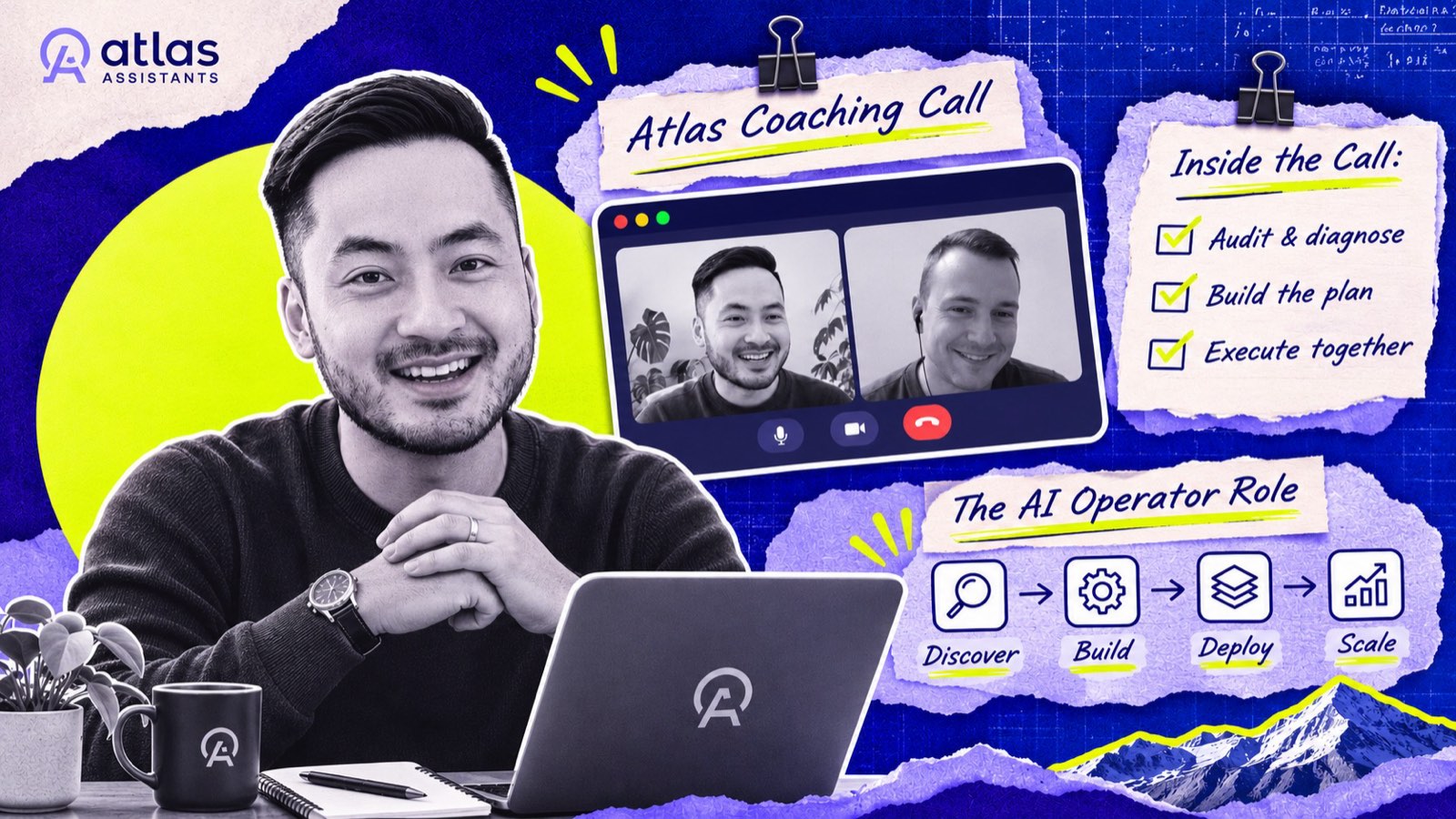
Demand for traditional EA work is falling and demand for AI-supported workflows is rising. In this recorded coaching call, Colin Pal defines the four jobs of an AI operator, shows the agent that writes his start-of-day brief, and lays out the three habits that get someone there.
 Colin Pal
Recorded 27 March 2026 · Published 2 November 2026
- The Honest Reality Check
- The Four Jobs of an AI Operator
- Three Habits That Get You There
- What This Means If You Are a Founder
- Frequently Asked Questions
Key takeaways
- An AI operator does four things: builds and ships solutions, manages and maintains them through versions, quality-controls every output, and gathers feedback from the executive to improve them.
- An agent needs the same things a new employee needs: context, memory, skills and tools, a schedule, channels, a workspace, security and task management. Learn that and building stops being scary.
- An autonomous agent is just an agent with a clear schedule. Someone still has to own it, and executives do not want that someone to be them.
This is a recording of an internal Atlas coaching call, and we are publishing it because founders keep asking the same question: what does the person running my AI actually do all day? Here is the answer, given to the operators themselves.

Watch on YouTube · More from the Atlas channel
The Honest Reality Check
Colin opens with the market as Atlas sees it. Demand for the traditional EA role, the inbox-calendar-tasks job as it was described two years ago, is going down. Demand for AI-supported workflows is going up fast. The first sprint to deploy Atlas's EA Agent to clients had hand-raisers immediately.
He is equally direct about what that means for the people on the call. Will there still be executives who want a human EA? Yes. Will there be as many? No. Will upskilling into the operator role guarantee a job? Far more likely, for one reason: executives do not want to manage their own agents. They will use the agent. They will not fix it when it breaks, keep it current, or make it better. Someone has to, and the person who already knows the executive is the obvious choice.
Would your executive want to manage their own agent? Fix it when it breaks? Keep improving it? Probably not. That is the job.
The Four Jobs of an AI Operator
- Build and ship solutions. Take a recurring workflow, write the playbook for it, turn the playbook into a skill, and get an AI tool running it on repeat with consistent output. Start-of-day briefs, meeting prep, SOP drafting, a newsletter engine.
- Manage and maintain. Nothing is right the first time. Skills get versioned like software: V1, V2, V3. Run it, test it, check the executive is happy, refine, repeat.
- Quality control. The human in the loop. Review outputs, catch errors, make sure results meet the standard before they reach the executive or a client.
- Gather feedback. Check in with the executive regularly. What is working, what is missing, what changed this week. Take it back into the build.
The analogy Colin uses: this is what an entire product team used to do, and one person with the right skills can now do it with natural language.
In practice. Atlas's own agent, Kai, writes Colin's start-of-day and end-of-day briefs. It did not remove the human. Lamia, his EA, reviews every brief, instructs Kai when something needs to change, and keeps the output useful. On the same call, Lamia shared the set of Cowork skills she built to run the two Atlas newsletters from idea research to drafted copy, with a human review before anything goes out. That is the role, live.
The Airtable story lands the point. For two years the team waited for one small feature. When you can build, you stop waiting: the missing feature gets built in an afternoon, not a roadmap quarter.
Three Habits That Get You There
Stay current without drowning. Pick one lane, for most operators Claude Cowork and then Claude Code, and get dangerously good at it. Then let the AI keep you informed: Cowork has a built-in Skill Creator; use it to build a weekly skill that pulls the latest updates in your lane and explains how each one is relevant to the EA role, with five use cases. Colin runs a daily version for himself, plus a Friday skill that turns the week's news into five new skill ideas for clients. The same skill, pointed at your executive's industry, becomes a weekly brief they did not have time to compile.
Understand the infrastructure. Colin asks the room where they create documents, manage tasks, run schedules and communicate. Everyone answers instantly: Drive, Notion, Google Calendar, Slack, Gmail. Nobody knew that before they learned remote work; now it is obvious. AI is the same. The components that make an agent work are the components that set up a human employee for success:
- A context system (the project folder, the handbook, the preferences)
- A memory system, so it does not forget between sessions
- Skills and tools (the SOPs and the access to do them)
- Scheduling, which in the AI world means cron jobs; an "autonomous agent" is an agent with a clear schedule
- Channels, so it knows where communication goes
- A workspace for files, security and policies, and task management
Learn these once and any tool is just a matter of which components it already has and which you add. Small habit from the same lesson: AI works in Markdown. Get comfortable with .md files.
Build and ship fast. Do not wait until you have learned everything. Build the thing, hit the wall, ask the AI why, fix it. Colin went from zero code to production-ready agents that way, not through courses.
What This Means If You Are a Founder
Three things worth taking from a call that was not written for you.
First, the role your Atlas operator is trained for is not "assistant who uses ChatGPT". It is owner of the AI layer: build, maintain, check, improve. Second, the quality-control step is the whole reason outputs you receive are finished rather than plausible. Third, the question of who manages your agents is not hypothetical; the more you automate, the bigger it gets. We wrote about the DIY version of that problem here, and about how these operators are selected.
Frequently Asked Questions
Is This Call for Founders or for EAs?
It was recorded for Atlas EAs, which is exactly why it is useful to founders: it shows what the person running your AI is being trained to do, in their own words, without a sales layer.
What Is the EA Agent Mentioned in the Call?
Atlas's agent, named Kai, which produces start-of-day and end-of-day briefs, meeting prep and similar recurring outputs. It is managed day to day by an operator, which is the point of the call.
What Tools Are Used?
Claude Cowork for most operators, with Claude Code as the next step. The infrastructure lesson applies to any tool: context, memory, skills, scheduling, channels, security and task management.
Atlas places and trains executive operators, and coaches the founders who work with them. See what you are actually buying or book a call.
You Might Also Like

Doing It Yourself With AI vs Hiring an AI Operator
You have ChatGPT, a Claude project and a Grok bot. So why pay a person? An honest comparison, including the cases where you should not.

How Atlas Selects and Trains Operators
Over 2,000 people apply every week. About one in a hundred is placed. Here is what happens to the other ninety-nine, and what the one goes through before they ever see your inbox.
How Atlas Operators Set Up an AI Workspace: The Full Workshop
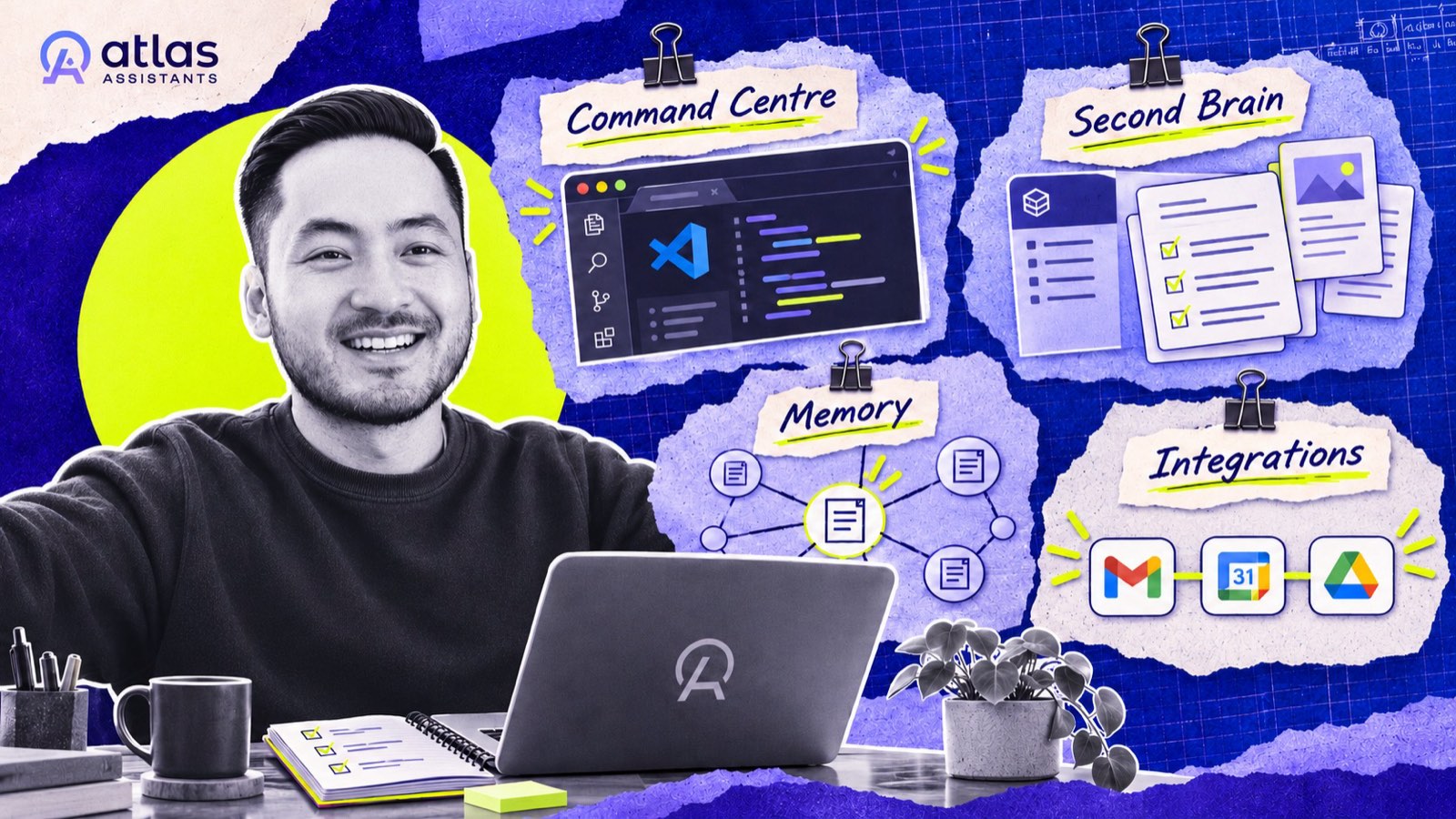
A two-hour, hands-on session in which Colin Pal walks Atlas EAs through the four components of an AI workspace, for themselves and for their executives: the command centre, the second brain, the memory system and the integrations layer. This is what 'your operator sets up your AI' looks like in practice.
You Can Make More Money.
You Cannot Make More Time
Two minutes to tell us where you are stuck. Then a conversation about whether this is the right moment for you.